

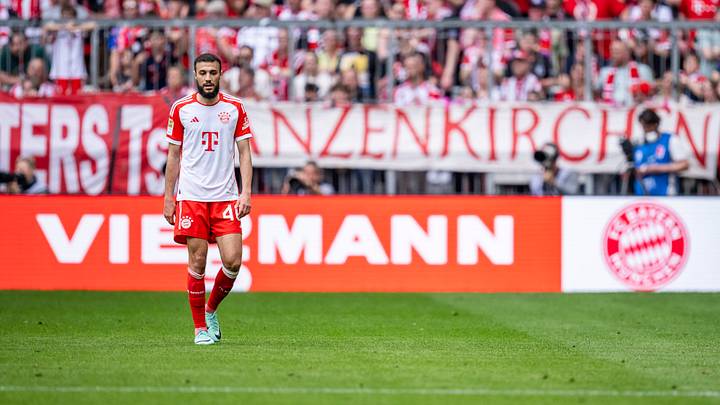
Bundesliga clubs and investors: It has never been a straightforward or easy relationship. For years, organisations such as the German football association have been exploring ways to strike a reasonable balance, and have never found a way to perfectly balance between club ownership and outside ownership. Germany has long operated under the much-discussed 50+1 rule. A rule that, in practice, ensures that outside investors never gain full control over the day-to-day running of a club.
Another often-cited aim of 50+1 is to prevent the financial gap between the elite and the mid-table clubs from widening further. Bayern Munich recently struck a lucrative deal with the family-owned company Viessmann. First, let’s look at the details.
Viessmann Generations Group wird Gesellschafter der FC Bayern München AG. ℹ️
— FC Bayern München (@FCBayern) October 22, 2026
🔗 https://t.co/QOZcg2EX5u pic.twitter.com/2VLnnSG69C
The deal with Viessmann must support ‘sustainability, international expansion and digitalisation’, but transfers?
The deal was announced on October 22nd, and according to several German media outlets, the investment amounted to a total of €250 million. It gives Bayern fresh capital while keeping the existing ownership structure intact.
Although Bayern has not disclosed the precise details, Viessmann is understood to hold a stake of around 6.7%. The supervisory board will also expand from nine members to ten, with the newest member being Max Viessmann.
Beyond the financial injection, the deal is intended to support sustainability, international expansion, and digitalisation. The remaining shares stay in the hands of the long-standing principal sponsors: Adidas, Audi and Allianz.
In an interview with the Süddeutsche Zeitung, Herbert Hainer and Max Viessmann stressed that the multimillion-euro investment was not intended to fund an immediate move into the transfer market, but instead, as mentioned earlier, the deal is geared more towards infrastructure, digitalisation, sustainability, and financial flexibility.
Präsident Hainer spricht in BILD: So lief der 250-Millionen-Deal des #FCBayernhttps://t.co/XWFcf6UxaE
— BILD Sport (@BILD_Sport) October 25, 2026
Although Bayern is not handing ownership over to an outside party, as happens in many other European leagues, the deal nevertheless has raised eyebrows in the boardrooms of other leading Bundesliga clubs.
Bayer Leverkusen chief executive Fernando Carro told Bild: “Bayern have always had greater resources than the rest of the league. That should motivate all of us to challenge the club year after year with every means at our disposal.”
He added: “But one thing is also clear: this deal widens the gap even further. In German football, we have chosen the existing model. We must therefore also accept its consequences for competition.”

RB Leipzig’s CEO struck a similar note when speaking to the same outlet: “We’re not focused on giving up, but on getting better. FC Bayern has extraordinary financial resources and continues to strengthen its position with partnerships like this. We can only congratulate them on that, and it underscores once again what an outstanding job they’ve been doing for decades.”
Criticism about ‘gaps’ from other top clubs in the Bundesliga is not justified
Bayern have indeed strengthened their financial position through this partnership; however, much of the criticism from their rivals does not really stand up. Bayern are simply complying with the 50+1 rule and the other agreements governing outside investors.
Dortmund, RB Leipzig, and Leverkusen have also struck lucrative deals in the past, deals that may, on balance, have brought in even more money than Bayern’s agreement with Viessmann.
The real question is this: what exactly will Bayern do with those millions? For the fans, the lack of full disclosure is somewhat frustrating. There is already no clarity on the exact amount involved, let alone what it will actually be spent on. Will it really go towards sustainability, or Viessmann’s own core business? The discussion remains vague.
It had already been stated that Bayern would not be active in the January transfer window, yet their lengthy injury list, for example, would justify making moves. And it is unfair to leave fans in the dark about the club’s spending. Supporters also fill the club’s pockets every week through substantial gate receipts, kit sales, etc.
Do rival clubs have a point about the widening financial gap? Strictly speaking, no, because any club can secure an investment of this kind within the 50+1 framework. Bayern are simply following the German Football Association’s guidelines.

The gap should be easy enough for a club such as Borussia Dortmund or RB Leipzig to close. Besides, they too have received lucrative multimillion-euro sums in the past and could do so again through similar deals.
Criticism of lack of transparency however, is justified
There is, however, a valid criticism to be made from within the club. Namely, the lack of genuine transparency about where those millions are going. The emphasis appears to be more on club infrastructure and related projects, such as sustainability.
In the longer term, the money could serve other spending needs at Bayern perfectly well. But be specific about it, because the fans also invest heavily in the club. Some of the money could certainly go towards signings, including in January.
It remains to be seen whether the Viessmann deal will really work out well for Bayern and their fans.
 Add us as a preferred source on Google